| Getting your Trinity Audio player ready... |

If you’re a fan of Eckhart Tolle’s writings and online content, you’ll be well aware of his concept of the Pain Body. However, you may have struggled to grasp what Tolle exactly means by the Pain Body. If you do have a good handle on what the Pain Body is, you may have then struggled to deal with your own Pain Body and the often upsetting emotions that it brings.
In this article I will put forward what I see as Tolle’s view of the Pain Body – that it is our deepest psychological wounds, created in past situations which arises in us as both a general feeling of unease and negativity, or as sudden outbursts of emotion triggered by events or experiences that evoke that past hurt.
I will show how Internal Family Systems (IFS) therapy is a great therapy to use to help you both understand your own Pain Body, ultimately accept it, and through this acceptance, reduce and eventually completely transform the effects it brings in your life.
What Is The Pain Body – Is It A Real Entity?
Eckhart Tolle introduces the concept of the Pain Body in his first book The Power of Now where he first describes it in these terms: “…accumulated pain is a negative energy field that occupies your body and mind. If you look on it as an invisible entity in its own right, you are getting quite close to the truth. It’s the emotional pain-body.”1
The concept is returned to again in his other major work A New Earth where Tolle says, “The pain-body is an emotional pain entity. It is made up of energy and lives in human beings. It has its own primitive kind of intelligence, one that is directed toward survival.”2
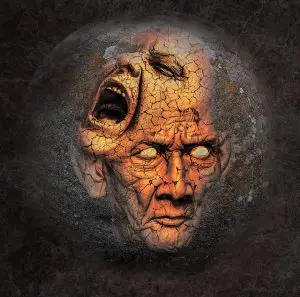
These quotes make the Pain Body sound almost as if it is a real entity, like a demon that possesses us, making us do things we dislike and act in ways we regret. However, though Tolle’s language can evoke this kind of view, I have never taken this interpretation. It is too literal. Though being taken over by your Pain Body may feel like you have been possessed, this is a feeling we all know too well – that of being carried away by our emotions, though in extreme ways.
In A New Earth Tolle says, “Once the pain‑body is triggered, it takes over your thinking and your body — you literally become its instrument. In that state you act out the old pain patterns through words, deeds or thought‑forms, and by doing so you feed and strengthen the pain‑body all over again.”3 This quote gets at the heart of the experience of The Pain Body and where it comes from and how it renews itself.
The Pain Body is a part of ourselves that interfaces with the world through painful emotions- rage, fear, jealousy, envy, greed, criticism, self-hate etc. This part of ourselves becomes our dominant way of dealing with the world (it takes us over) and we express these painful emotions as verbal or physical violence, or self-harmful thoughts through any number of ways. These harmful emotional reactions and the subsequent actions are habits practised over many years and which are further strengthened each time these feelings are in effect.
Some people live most of their lives in a state of painful emotional reactivity (their Pain Body) while in others the emotional reactivity comes forward suddenly and overwhelms them, like a tidal wave. All of us can relate to both of these experiences. Most obviously we have all felt out of control either through a sudden burst of fear or anger. Less easy sometimes to spot may be an underlying feeling of inadequacy or fear of failure perhaps that can dominate our everyday experience of the world and our actions.
The Pain Body As Emotional Learning
It is only through engaging with our Pain Body, in whatever form it arises, that we can heal it’s effects and live happier lives. To do this we must first recognise it and fully see it in ourselves. Eckhart Tolle’s way to do this is to be aware of your Pain Body, to shine the light of presence on it:
“So the pain-body doesn’t want you to observe it directly and see it for what it is. The moment you observe it, feel its energy field within you, and take your attention into it, the identification is broken. A higher dimension of consciousness has come in. I call it presence. You are now the witness or the watcher of the pain-body. This means that it cannot use you anymore by pretending to be you, and it can no longer replenish itself through you. You have found your own innermost strength. You have accessed the power of Now.”4
This of course is easier said than done and there can be a sense of the chicken and the egg – one has to be present to be aware of your Pain Body, but when you are caught in the grip of the Pain Body, you are anything but present. But the first step of course is to find a way to start stepping outside of your own Pain Body, of becoming present at least to its effects, even if this is not complete presence in all aspects of your life.
Accepting The Pain Body Is The First Step To Healing
You are your Pain Body – it is a part, or parts of you – you can’t chase it away, or just ignore it. And if you think you can simply drown it with alchohol, or narcotics, or food, or sex, or work, or any other activity or substance, then all you are doing is strengthening it. Really, it is your Pain Body itself that is guiding these kinds of coping mechanisms.
You have to go deeper. And the first step to going deeper is to accept that your Pain Body, whatever way it manifests within you, it is part of you. You must accept that. The best way to do this is by becoming aware of what you are thinking and primarily what you are feeling – your emotions.
In his excellent book, Emotional Processing, Dr. Roger Baker discusses the overall way in which we experience emotions both physically and mentally and also the various ways in which we try to control or inhibit our experience of these emotions through expression or suppression. All psychotherapies, as talking therapies, are essentially ways to help us heal ourselves by processing our emotions. Baker shows this through the case studies of those he has helped process difficult emotional experiences.
As Baker says, “The control or regulation of emotion is part of a healthy childhood development, and the ideal is neither too controlled (for your own health) or too uncontrolled (for the health of others). In an ideal world it is ‘just right’.”5 However, it is fair to say that none of us have ever achieved this just right in all aspects of our lives. Some of us may have learned to be successful in processing our emotions when it comes to one aspect of our lives, say we engage respectfully when challenged about a matter at work, but perhaps we blow up when challenged about our parenting style?
For each of us, what exactly brings our emotions to the surface is different, only you know what pushes your buttons. But it is important to acknowledge what it is. What makes you angry, sad, mad? If you are struggling to ask these questions then Not Nice by Dr. Aziz Gazipura is a great help in both asking the questions and finding the answers that will lead you to your Pain Body.
Once you find your Pain Body, accept that this is your own experience of the world manifesting as thoughts and actions. When you do this then you can start to engage with these emotions. The easiest way to do this I have found is through IFS therapy.
Inner Growth – Healing The Pain Body With IFS
In The Power Of Now, as well as talking about becoming aware of your Pain Body, Tolle talks about dissolving the Pain Body. I prefer to think of this as healing your Pain Body rather than dissolving it. The end point is the same. You will stop being taken over, or dominated, by unprocessed emotions and this will lead to a happier life, one dominated by inner peace and freedom.
I have no doubt that if you can fully witness your Pain Body in a fully present way, as Tolle describes, then essentially your Pain Body will lose it’s hold on you. But, it’s achieving that level of presence most of us struggle with, especially when blocked by an unresolved Pain Body. This is where IFS comes in. IFS is a great way to make contact with your Pain Body and start to understand it and heal it’s pain.
IFS is a type of therapy that sees the human condition as being made up of both sub-personalities and a higher level Self. Language here is critical and the higher level Self (with a capital S) in IFS is not the same ego-self as Tolle talks about. In IFS the Self is more like the state of presence. You can recognise you are in this state of presence or Self by the feeling you will have both towards your own emotions and to others. Richard Schwartz, in No Bad Parts, defines this feeling with the 8 C’s of the Self – You will feel Curious, Calm, Confident, Compassionate, Creative, Clarity, Courage and Connected. Feeling these qualities is certainly in line with how Tolle and others describe the feeling of spiritual awakening.
When acting in a Self-led way we are aware of our many competing sub-personalities (which are driven by our desires and fears) without being taken over by them and crucially without judging them. In Tolle’s language we are in a state of presence, aware of our ego’s various desires and fears – our form identity or life situation.6 Of our ego’s desires and fears, the more chronic or violent ones are our Pain Body.
Though Tolle never uses the term sub-personalities in his books, he does use this term in the podcast series Eckhart Tolle: Essential Teachings available on Spotify.7 In the episode titled Growing Up and Waking Up Tolle discusses the subject of maturing as a person (growing up) as well as maturing spiritually (waking up) when he imagines a person who may be awakening spiritually but who is still acting out patterns of behaviour from immature sub-personalities.
By practising IFS, you can make contact with the sub-personalities that are both ego and Pain Body from a place of presence (Self) and so you are essentially shining the light of presence onto these parts of yourself. In terms of a part of yourself that is causing unhealthy behaviours, toxic thoughts feelings this is a Pain Body part of yourself. Seeing your Pain Body as a part of yourself, you will find that this part of yourself, though destructive, is actually trying to protect you from a part of yourself that is likely to cause you even more pain if exposed without a sense of love towards it.
For help with getting started in practising IFS please see No Bad Parts, Self-Therapy and the healing meditation in the article Meditation 3-Ways.
This is the irony of the Pain Body – seen from the perspective of IFS – it is not a scary monster to be avoided, but rather an extremely wounded part of ourselves. As such, it needs our love to heal it and so free it from the role it has taken on, or gotten caught up in. By seeing our Pain Body as in need of healing we can then free it and so free ourselves of it’s formerly toxic effects.
What’s more, with IFS, our Pain Body parts can actually be transformed into powerful helpers to further enhance our lives.
Pain Bodies plural is much more accurate as in IFS different parts of ourselves take on different roles. You will have felt this yourself when it seemed like you could act perfectly reasonably in one situation then like a toddler in a tantrum in a different situation. You have multiple Pain Bodies, each trying to protect you from feeling a different wounded part of yourself.
Your Pain Bodies Will Be Different To Mine
Who are you? What are your triggers? What in your life is bringing you down? Where does it hurt?
I like intellectual stimulation. I like honesty and simple pleasures. I am triggered particularly by feelings of betrayal, by loss and by rejection. I used to have a near constant feeling of failure and inadequacy. I used to experience extreme lower back pain. These are some of my Pain Bodies. Each was a part of me that was trying to tell me something, a part of me that needed loved and transformed.
Your Pain Bodies will be different to mine. Perhaps you already know them well. But if you don’t, or you want to start to know them better, the best places to look to find them are the same places for all of us – these are the places that matter the most and occupy the most of our psychological time – our love lives, our family lives, our working lives and our physical bodies.
Look to your thoughts and feelings and to your actions and to your body.
Ask yourself the following questions –
What am I angry about? What am I sad about? Who makes me shudder? What makes me wince? What am I ruminating about? What do I think about myself? How do I feel about my daily life? What am I doing in my life that I don’t enjoy or am ashamed off? Where in my body do I experience aches and pains? What illnesses have I had that seemed to have no distinct cause? Why do I drink/take drugs? Why do I overeat? Why do I overwork? Who am I at war with?
Ask these questions of yourself and more importantly, listen for the answers.
However, importantly, check yourself for your biases. This means you need to look at how you have learned to see the world, generally from childhood. This is what Dr. Roger Baker calls your emotional schema. “…these refer to the way in which these implicit emotional rules are organized, laid down in memory during our childhood, and influence a person’s life and behaviour for many years, sometimes for a lifetime. They refer to the way people feel about themselves and which emotions come most easily to them.”8
This can be different for all of us and for some it is extremely negative – such as a belief that other people are not to be trusted – this is a background Pain Body in its own right. Finding our emotional schemas can be difficult because it requires looking at our thoughts, feelings, actions and pains almost from outside of ourselves. Again, practicing living in the present moment will help with this, especially if combined with seeing oneself as more than our ego and actions, our form identity and our life situation as Tolle calls it, or World Identity as I describe it.
Ongoing Work – This Will Take Time
As with all long-lasting transformation there are no magic bullets to healing your Pain Bodies – this is why Tolle so often speaks of practice. You’re in this for the long-haul, so see practice as not making perfect, but as ongoing, as your daily practice to create a healthy life. Even if you are beginning the process of finding inner peace and freedom, of awakening, this doesn’t mean all will suddenly be well.
In his excellent book The Leap, Dr. Steve Taylor, who has undertaken a series of studies on spiritual awakening, interviewing hundreds of people in the process, points to the fact that their is a continuum of awakening, rather than a one size fits all of enlightenment! Taylor says this uniformity of experience is one of the myths surrounding awakening and that the truth is very different, “Some people may be more intensely awake than others; that is, they may have a stronger sense of union or connection, a more intense perception of the phenomenal world, a greater inner quietness and stillness, a wider sense of perspective, and a deeper sense of identification with the human race as a whole. The characteristics of wakefulness can express themselves at different degrees of intensity.”9
Also, it is worth noting that there is no need of any causality between healing your Pain Body and practicing living in the present moment. Neither excludes the other. You can practice self-examination – learning about your Pain Bodies alongside meditation and other ways to live in a more present way in the world. And, as said earlier, by using IFS to explore your Pain Bodies, this can enhance your practice of presence.
You do not have to be in a state of inner peace and freedom to understand and heal your Pain Bodies and when you reach a place of inner peace and freedom, this does not necessarily mean that all your Pain Bodies will be automatically healed.
Applying This To Daily Life – Respond Don’t React
The most important thing you can do is to develop your awareness of your Pain Bodies, rather than trying to chase them away.
This is what we have discussed with Tolle’s exhortation that the Pain Body cannot survive when we are present. This is ultimately true, but as discussed earlier, can be hard to put into practice. It is all too easy to turn presence into suppression when it comes to our emotional troubles. Most of the time, we would rather not think about emotional pain, but this not thinking is definitely not presence.
So the best advice is to practice becoming aware of your thoughts – are you in the grip of a daily drip of negative self-talk? Or, on the other side of the scale, do you find yourself suddenly angry or scared? How are you acting in life that is bringing you pain? What pain or illness in your body might be due to unresolved emotional issues?
Use meditation and IFS and self-reflection to help answer these questions. Try to count to ten when you feel an angry outburst coming. Think respond, not react. This way you can become aware of your Pain Body, identify what it is separate to other Pain Bodies, and begin to stop the cycle of feeding it with actions that make your life situation worse.
You can do this yourself (IFS is very much doable alone) or you can get help with this process. Which is right for you, only you will know. Perhaps a combination of the two? Reach out for help from a qualified therapist and at the same time, continue practicing being present.
Your Pain Bodies can be healed.
Footnotes
- Tolle, Eckhart. The Power of Now: A Guide to Spiritual Enlightenment (p. 36). New World Library. Kindle Edition..” ↩︎
- Eckhart Tolle, A New Earth: Awakening to Your Life’s Purpose, Chapter 5: “The Pain-Body,” p. 141 (Penguin Books edition, 2005) ↩︎
- Eckhart Tolle, A New Earth: Awakening to Your Life’s Purpose, Chapter 5: “The Pain‑Body,” Penguin Group edition (2005), p. 146. ↩︎
- Tolle, Eckhart. The Power of Now: A Guide to Spiritual Enlightenment (pp. 38-39). New World Library. Kindle Edition. ↩︎
- Baker, Roger. Emotional Processing: Healing through Feeling (p. 70). SPCK. Kindle Edition. ↩︎
- In my own language, we are Universal Consciousness, aware of our various World Identities. See Infinite Existence for more on this. ↩︎
- Tolle talks about sub-personalities around 18minutes into the episode called Growing Up and Waking Up. I would highly recommend this series as a way to further understand and apply Tolle’s teachings. There are lots of them and they are free to access. Each one is 30mins long at least and though some can be more rambling than others, all have the essential teaching that helps to transcend our everyday cares and find our place in the infinity of the present moment. ↩︎
- Baker, Roger. Emotional Processing: Healing through Feeling (p. 116). SPCK. Kindle Edition. ↩︎
- Taylor, Steve. The Leap: The Psychology of Spiritual Awakening (An Eckhart Tolle Edition) (p. 258). Hay House. Kindle Edition. ↩︎